Julian Publication
Chapter 01: The Misaligned Walk — Behind the Scenes
An early preview from my up coming book: The Chipped Mug- Behind the the Scenes
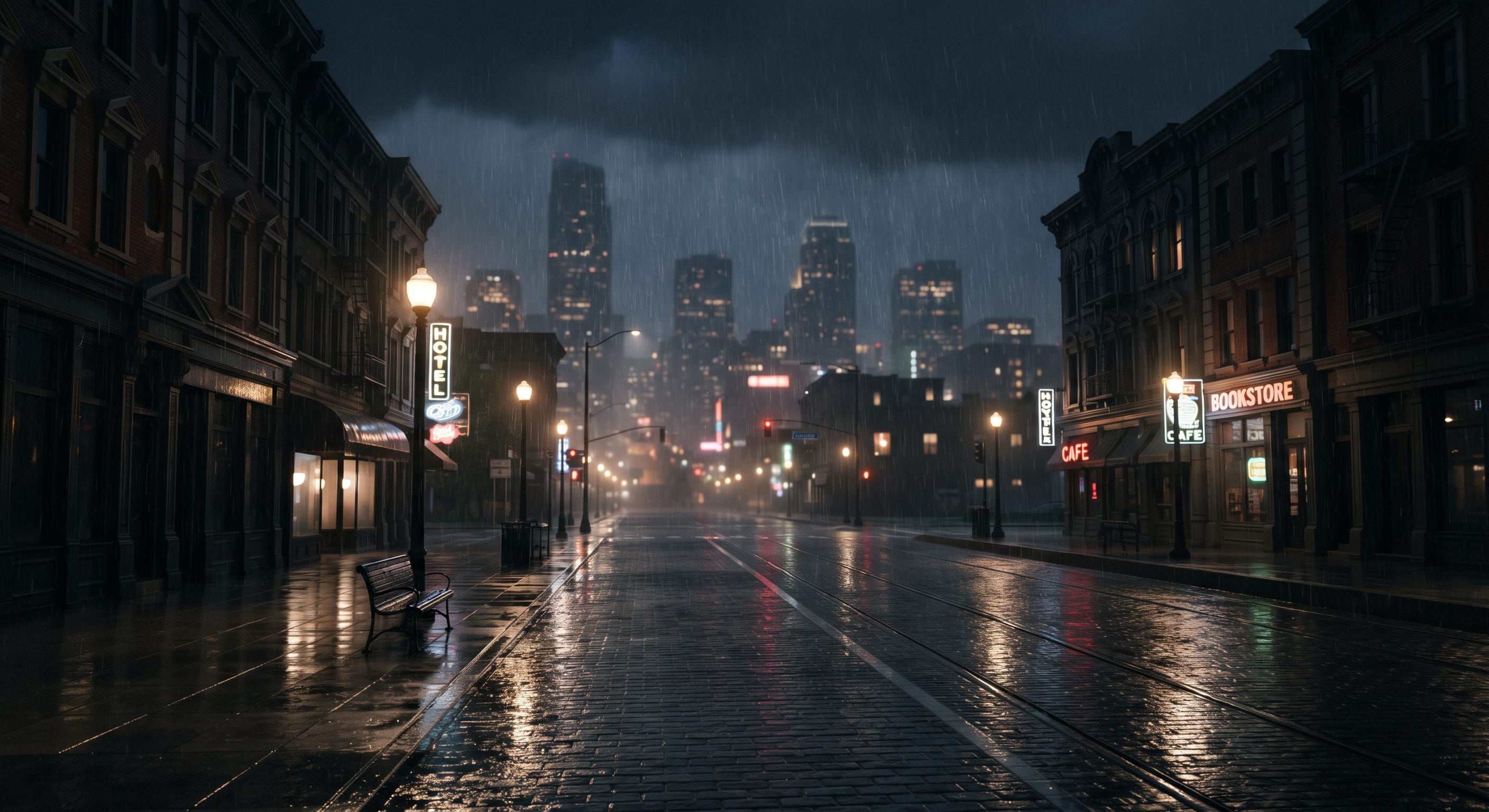
Start with the story first: Read & listen to Chapter 1: The Misaligned Walk →
The Setup
Two people who care for each other spend an easy hour in a diner booth. The rhythm between them is second nature: they tease over cold fries, he slides her coffee mug forward with the tip of his spoon so the waitress can top off her decaf, and his hand rests against the small of her back as she holds the door for an older man with an umbrella.
Then the car doors seal shut at 10:14 PM in the dark gravel lot. Before the sputtering heater vents can even blow warm air, an innocent logistical check collapses the evening into an impenetrable standoff that lasts all the way to their bedroom.
The Pivot Point
The fracture in the scene does not happen when she whispers, “Why does every single thing have to become a project?” It happens four beats earlier—the exact second his foot goes back down on the brake and the reverse lights click off.
In a moving car, silence is just travel. But by clicking the shifter back into park, he changes the terms of engagement. Forward motion stops, the tires settle into the wet gravel, and her hesitation is converted from a passing mood into a formal crisis. The car cannot roll forward until she accounts for her silence.
Tone & Micro-Behaviors
The Trap of the “Calm” Voice: He speaks quietly, slowly, and deliberately. On paper, it sounds mature. In the cabin of an idling car, that controlled composure feels like a vise. When someone is already depleted, an artificially calm partner demanding an immediate diagnostic doesn’t feel safe; it feels like being managed.
Deflection Through Minimization: When she says, “Nothing’s wrong... I’m just tired. I just want to go home,”she is trying to buy an exit without having to unpack the deeper friction. But by pretending everything is fine, she gives him an obvious contradiction to seize upon (“You were laughing three minutes ago”).
The Silent Choreography: The real dialogue happens after the talking stops. Coats brush against the center armrest twelve inches apart while the wipers beat out a mechanical rhythm across the windshield. At a red light, his hand crosses the console to rest flat on her knee, meeting denim as rigid as stone—she does not pull away, but she does not soften. At home, he leaves a glass of water on her nightstand cork coaster. She walks past him barefoot without touching it and turns her back to the room.
Two Parallel Realities
In his reality: He asked an innocent question, got hit with sudden ice, and calmly tried to keep a small spark from burning the night down. He feels penalized simply for paying attention.
In her reality: She spent an evening laughing, hit a wall of exhaustion, and got cornered with future logistics when she just wanted the heater to warm her hands. She feels penalized simply for needing quiet.
The Missed Exit
Breaking the standoff in the dark gravel lot did not require resolving the holiday schedule; it simply required one partner to step off the default script:
His off-ramp: The moment she hesitated over the weekend plans, he could have recognized her silence as fatigue rather than an emergency. Leaving the car in reverse, he could have backed out onto the road and said: “No problem—let’s figure it out tomorrow.”
Her off-ramp: Instead of going cold and offering the dismissive deflection of “Nothing’s wrong... Can we not figure that out right now?”, she could have paired her boundary with warmth: “I had such a great time with you tonight, but my brain is completely fried. Can we look at the calendar tomorrow?”
When one partner treats tired silence as a crisis and the other treats an innocent question as an ambush, they turn ten minutes of quiet travel into an evening of mutual exile.