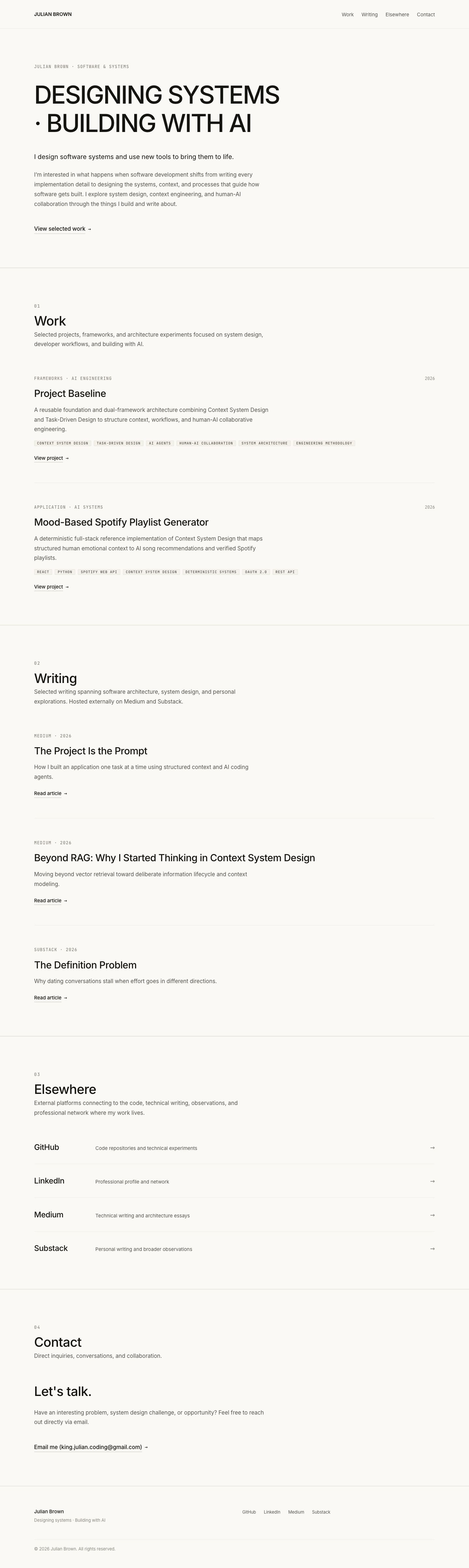
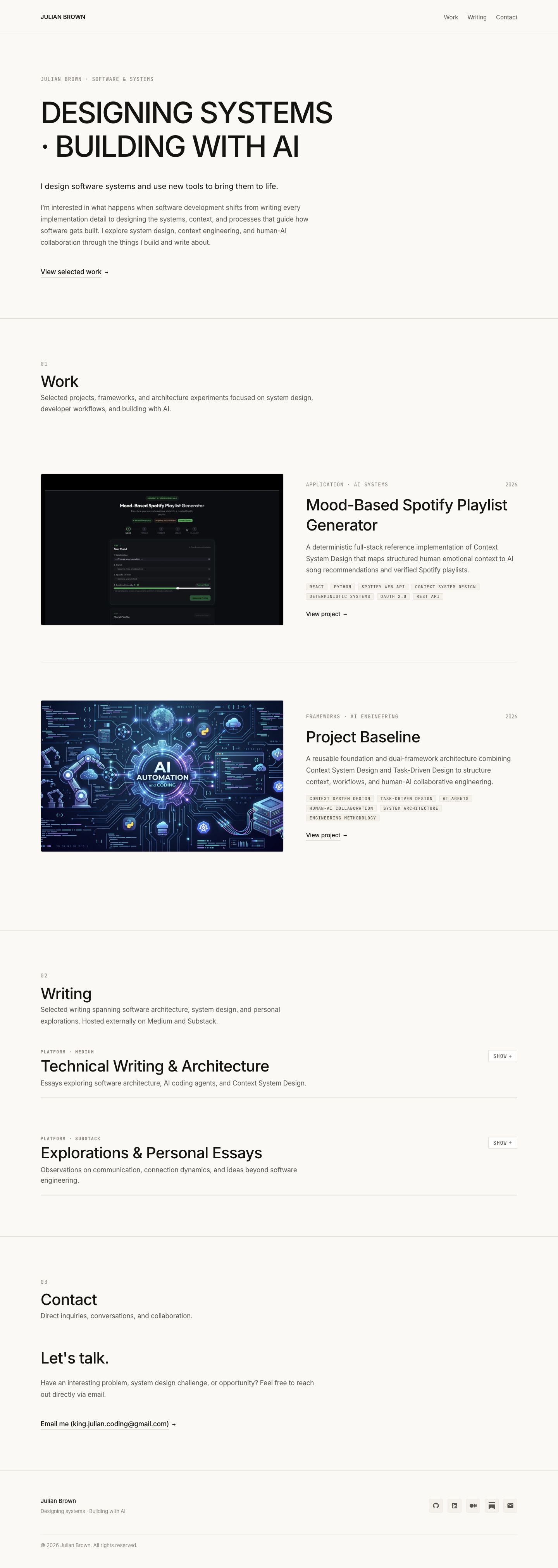
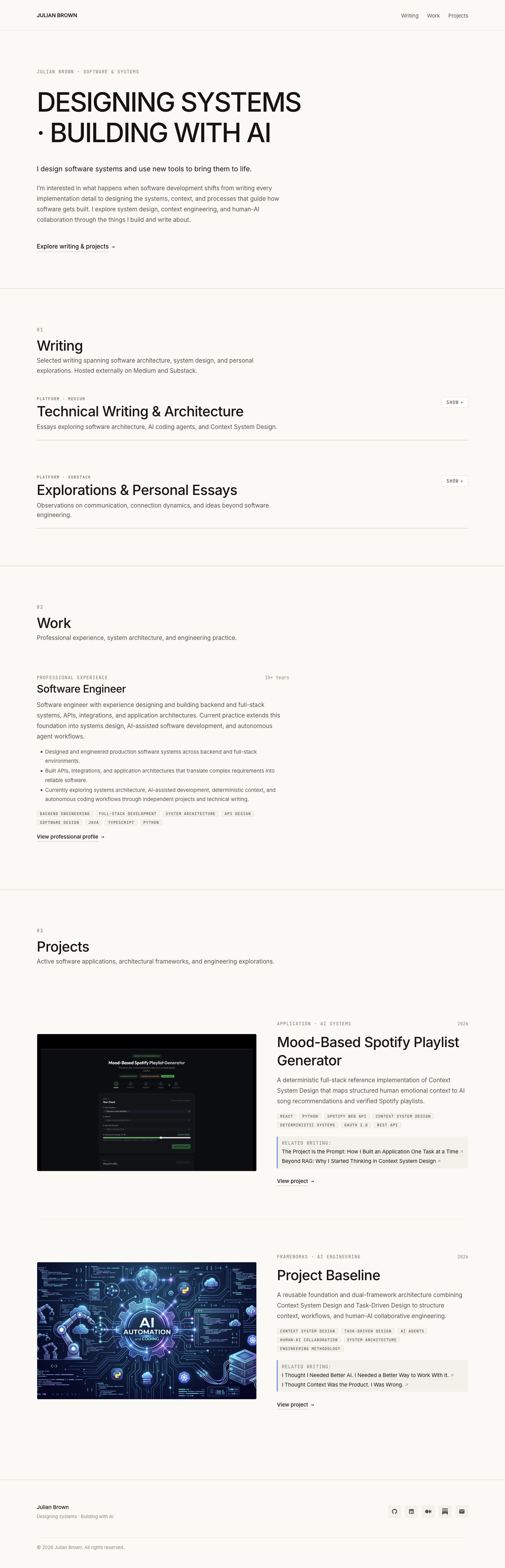
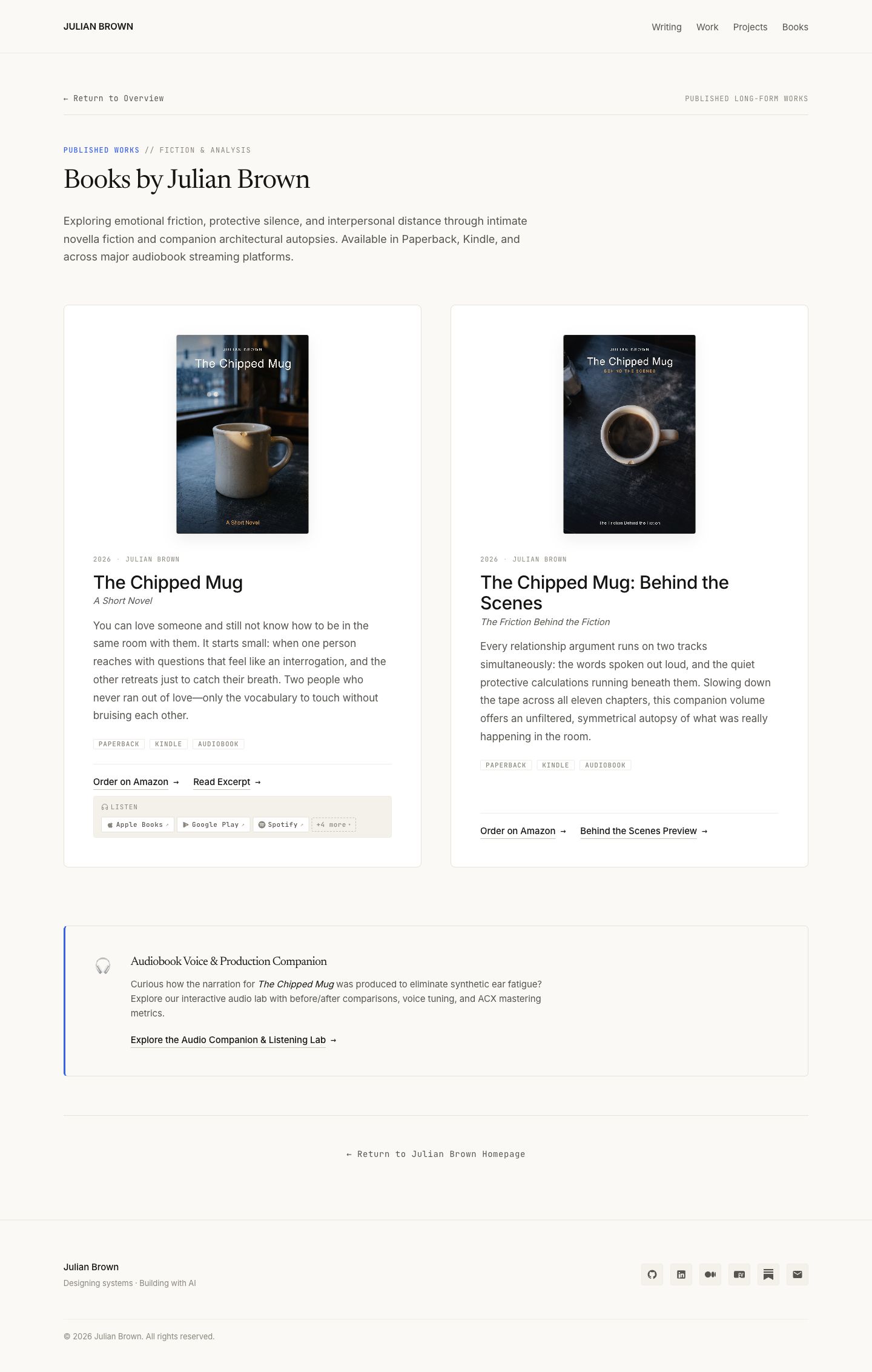
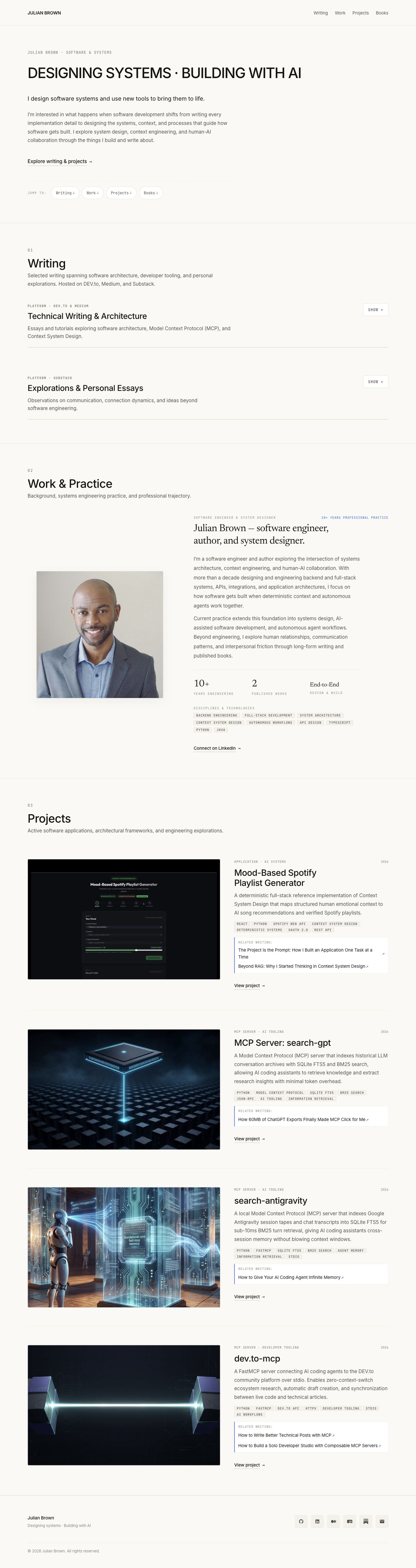
The site becomes a home for the author as well as the engineer.
The Chipped Mug and its companion first appeared on the long homepage. A few days later they gained a dedicated Books page with reading previews and audiobook destinations.
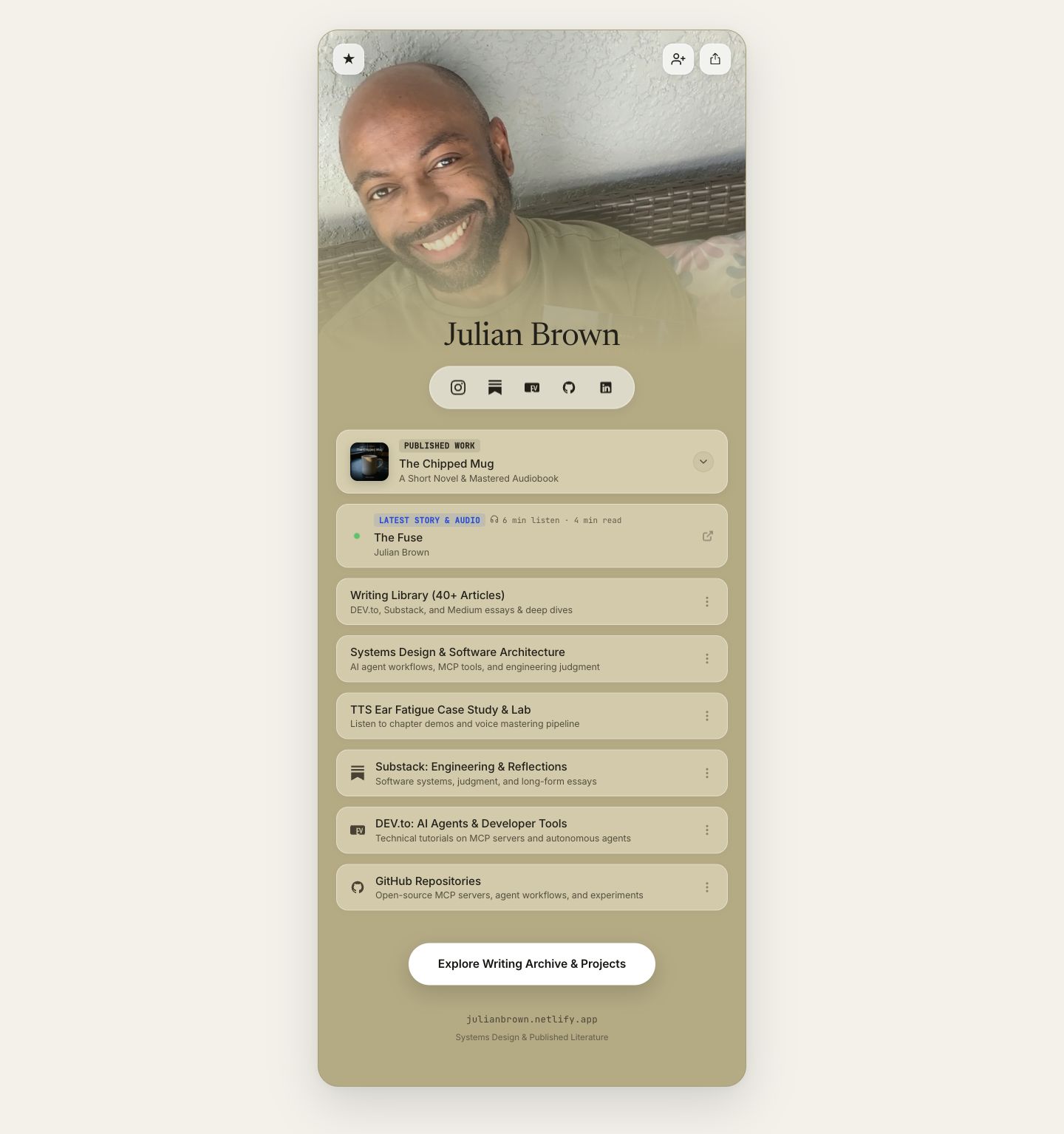
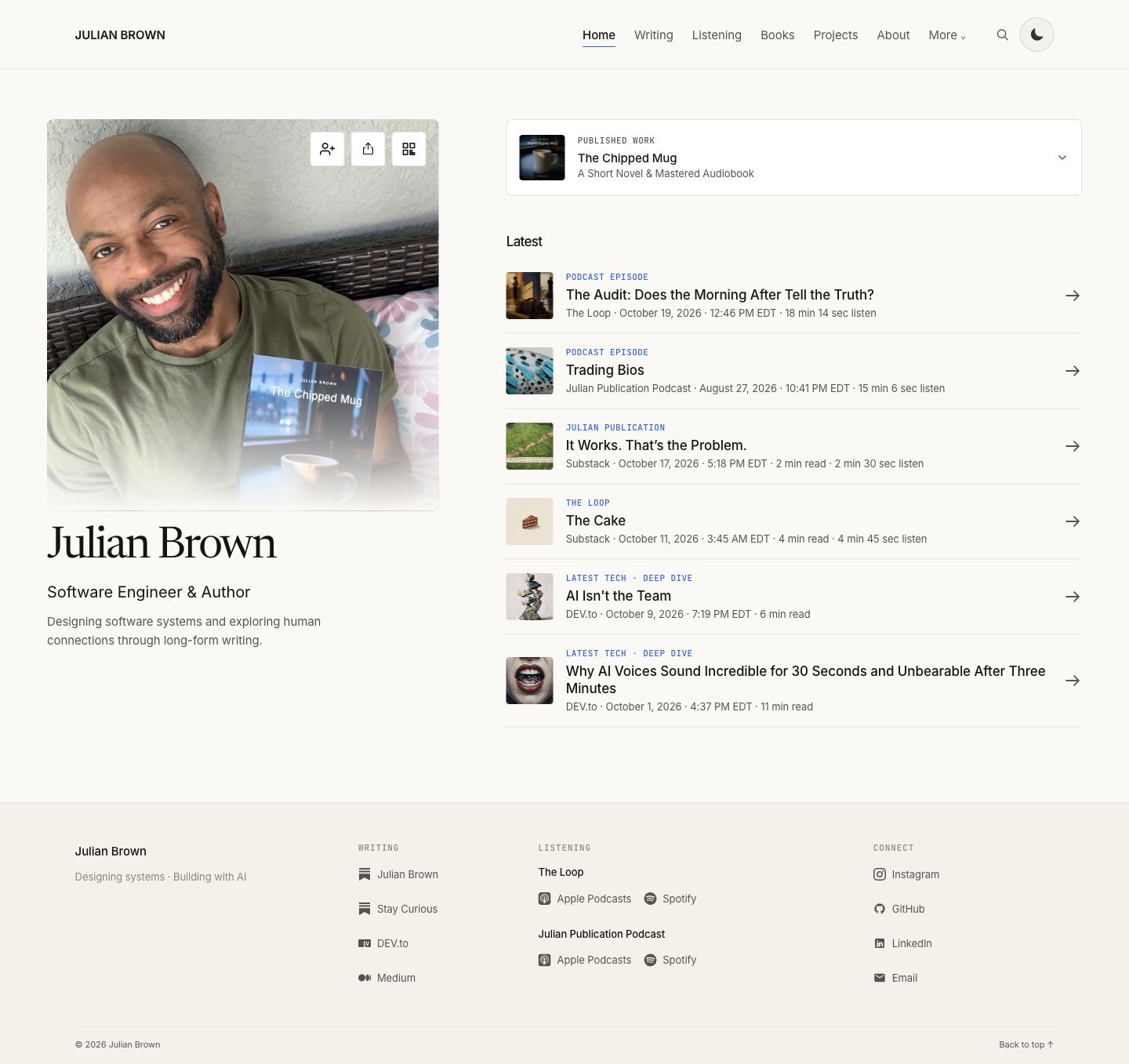
The homepage becomes a compact guide to the rest of the site.
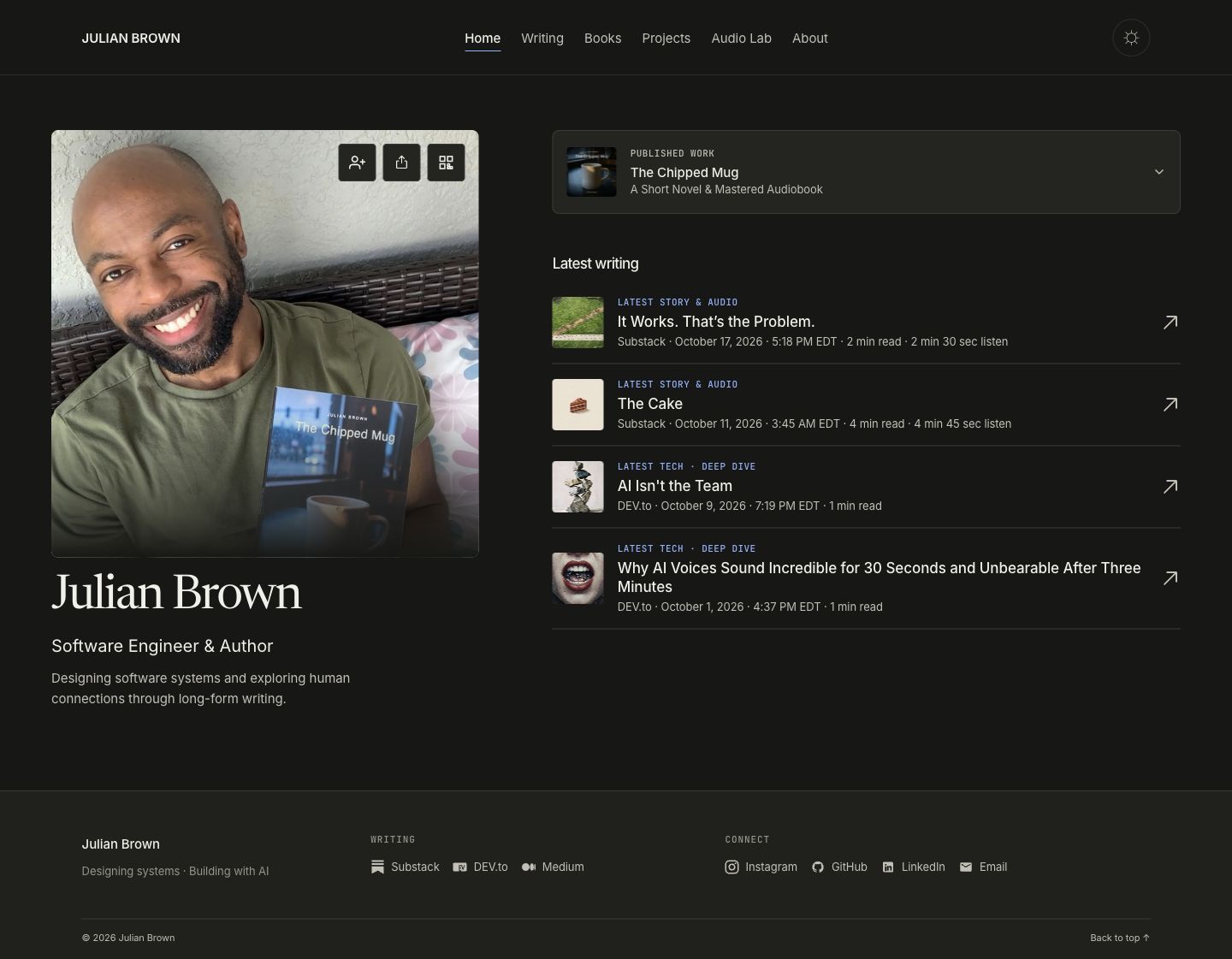
The long portfolio gave way to a portrait, social links, a featured book, and a set of destinations. The site now had a front door and rooms beyond it.
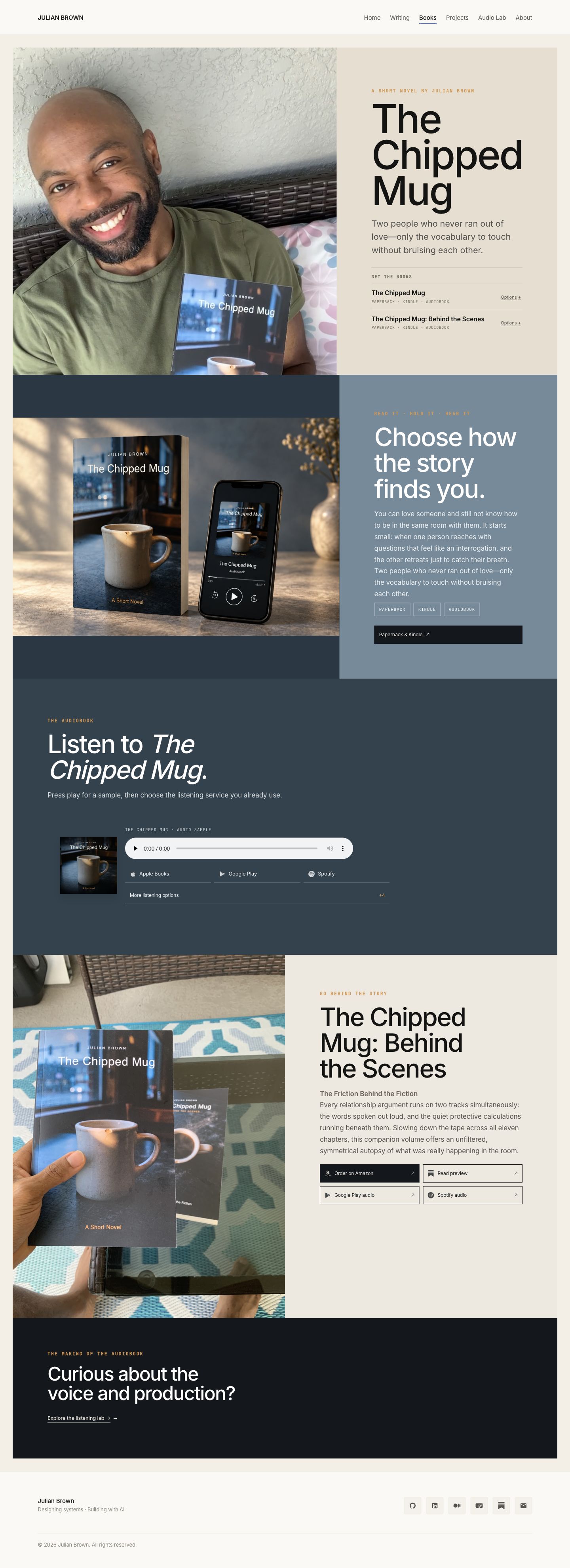
The books move from a catalog into a world of their own.
Cover cards gave way to author photography, full-width campaign imagery, and a choice of paperback, Kindle, or audio. A dedicated listening section brought the sample and audiobook destinations into the page, while the companion volume gained its own photographic story.
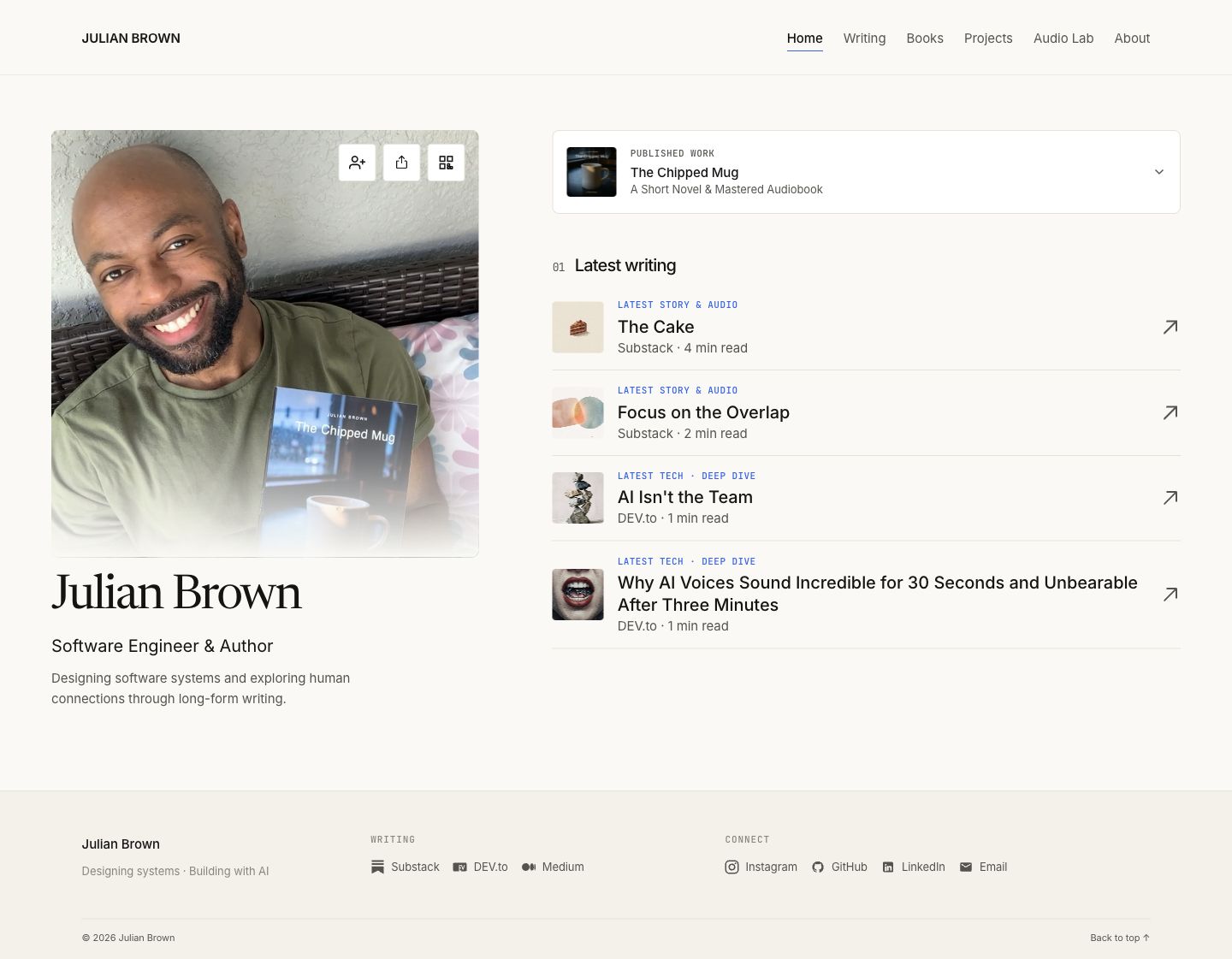
The book and recent writing become visible at a glance.
The compact hub evolved into an editorial layout: a personal introduction alongside the featured book and recent work, with shared navigation around it.
Visitors can browse a collection instead of a handful of outbound links.
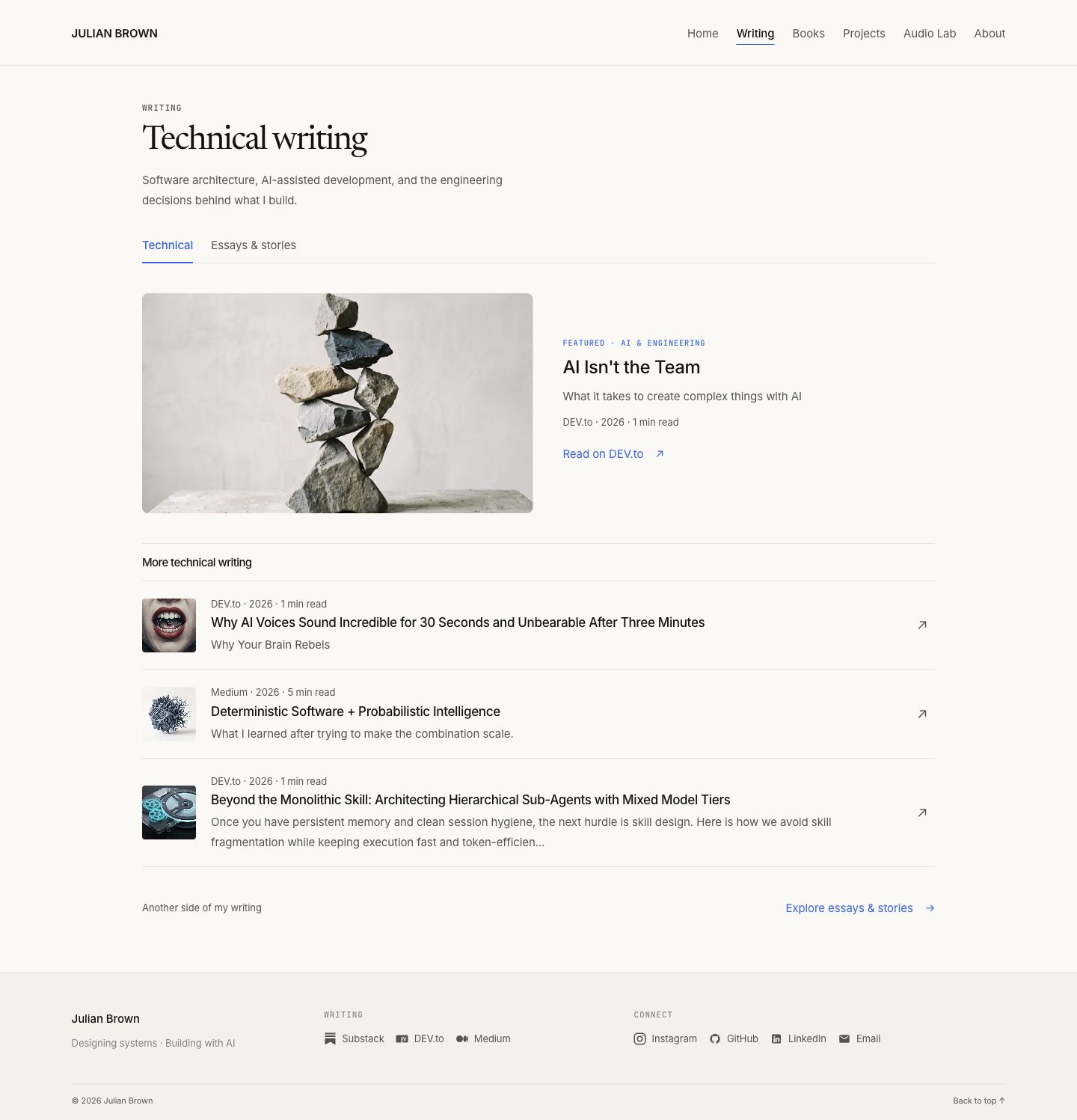
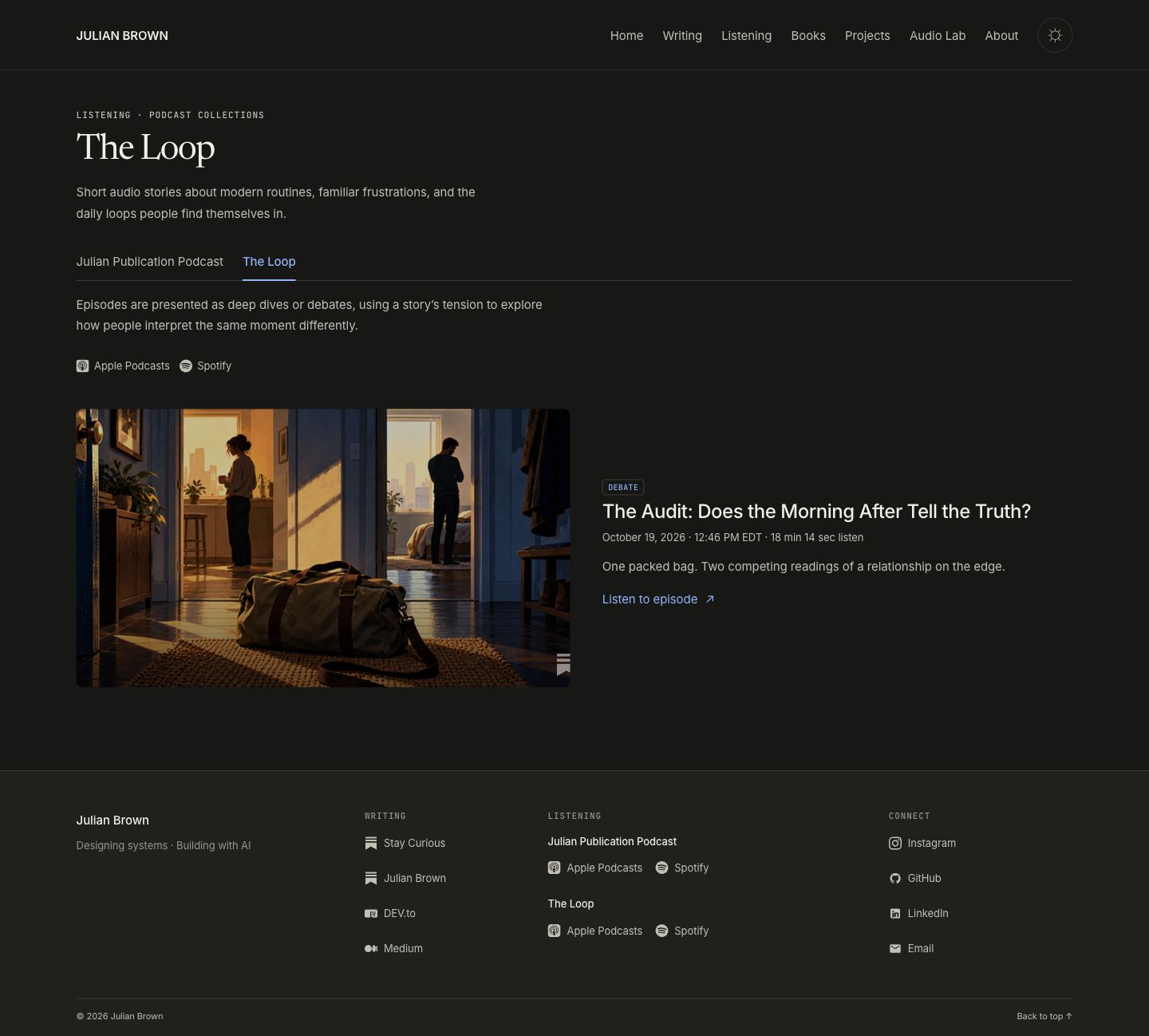
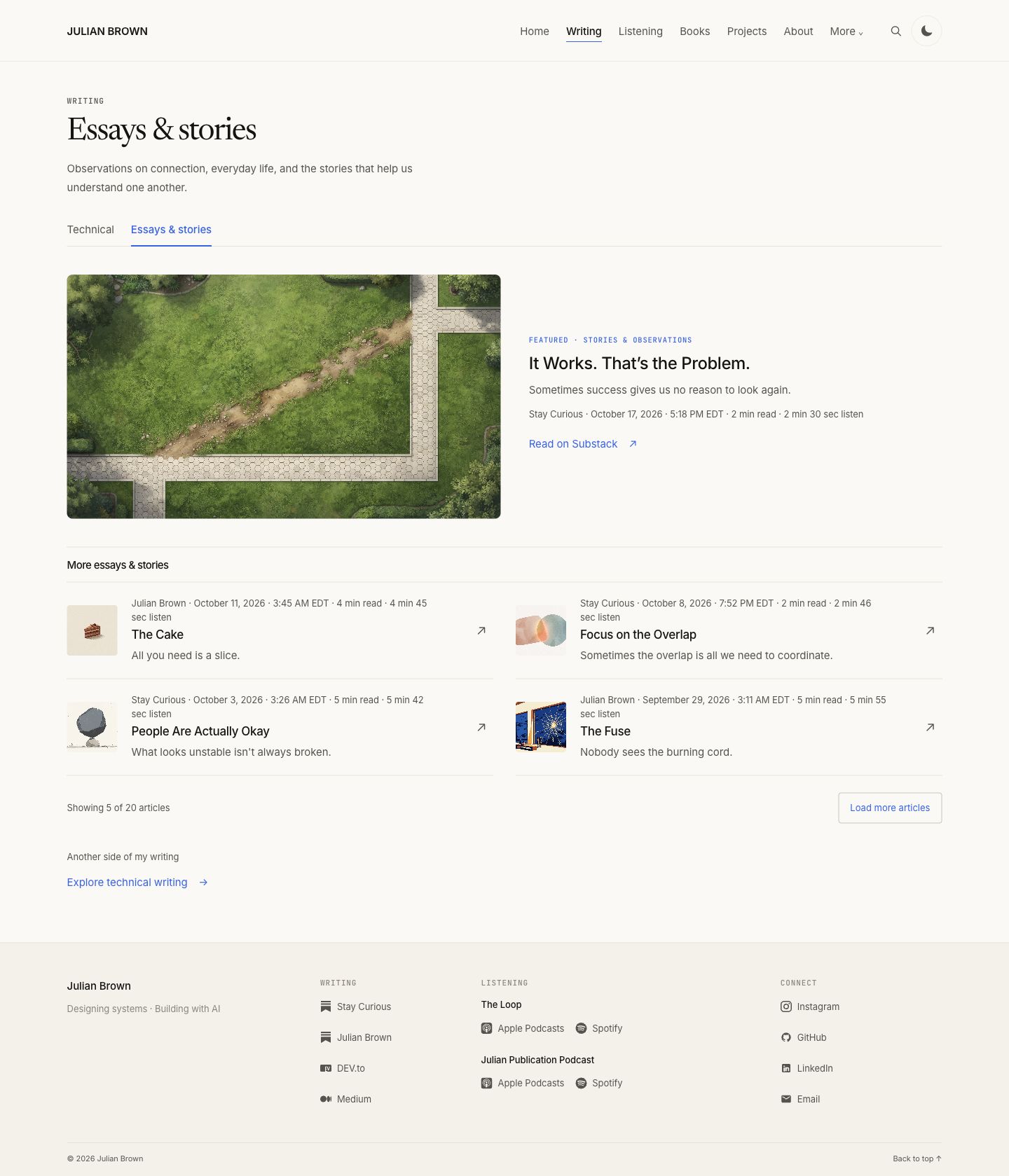
Dedicated Technical and Essays & stories pages introduced a featured article and a reading list. The collections would later separate into The Loop, Julian Publication, and Technical.
Readers choose when to explore more of the collection.
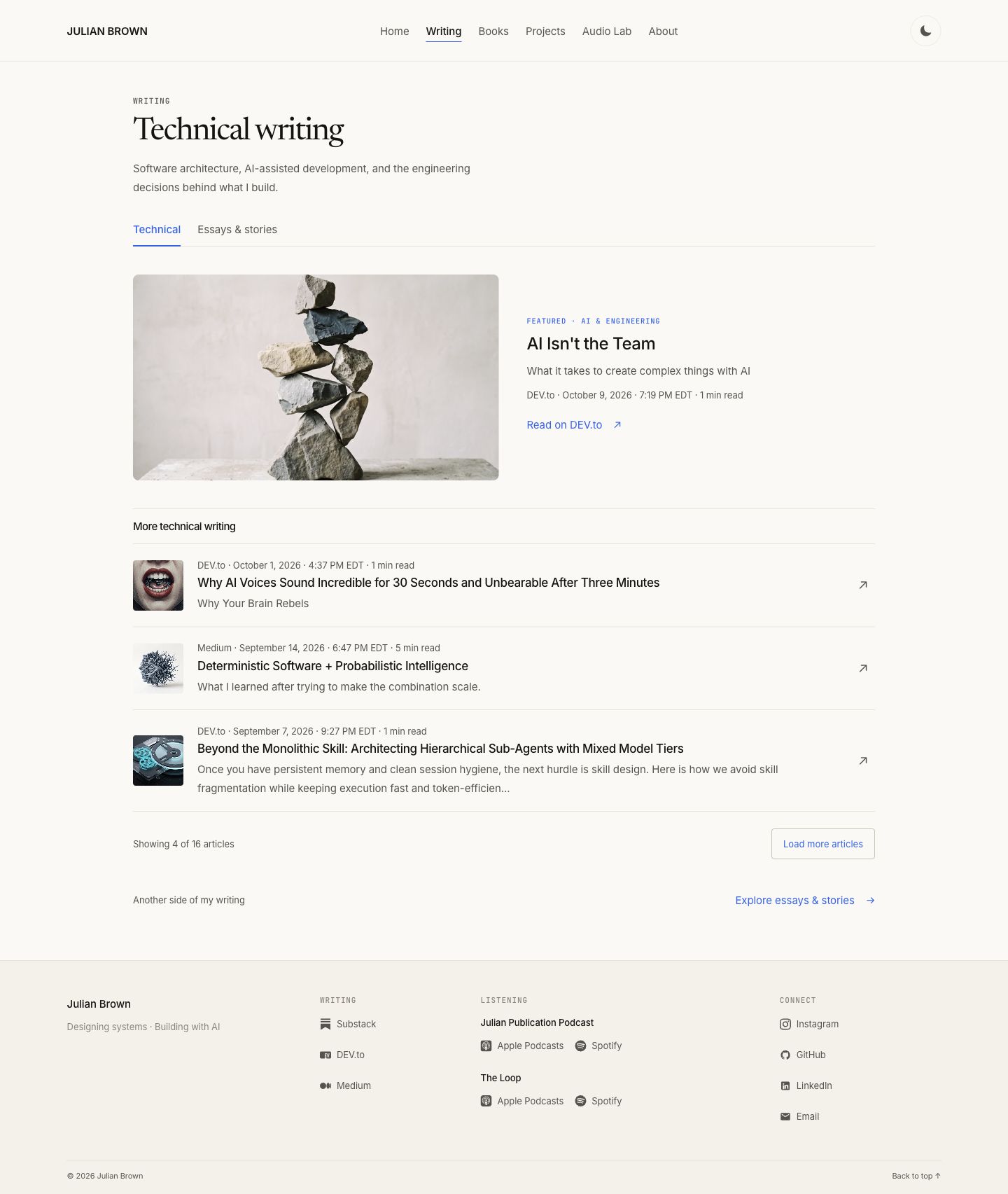
Writing starts with a small selection and a Load more articles button. Each click brings in six more pieces, with a progress count, retry option, and a clear end to the list. The rest of the archive waits until it is requested.
Load more · four articles first, six more on request
Small previews no longer need the same image as a large cover.
Substack preview images began using resized versions from its image service for covers and thumbnails across Home, Writing, and Listening. Reserved image dimensions, lazy loading, and asynchronous decoding help the artwork fit into the page without interrupting the reading experience.
Sized artwork · featured cover and compact article thumbnails
Sized artwork · featured cover and compact article thumbnails · /archive/essays · light theme · View source revision dc22746 ↗
14
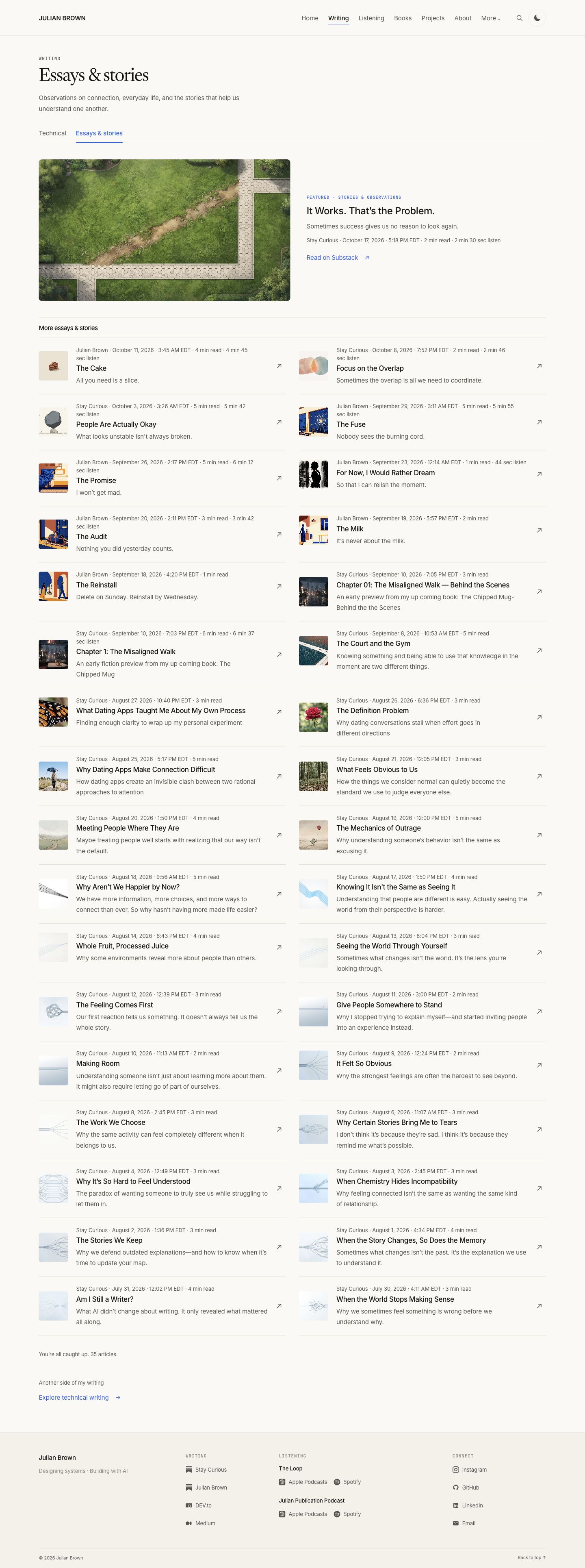
The missing writing comes back
Older posts become discoverable alongside the latest work.
Substack’s RSS feed only exposed a recent window of posts. A downloaded Substack export filled the gap: 15 missing published essays with images were added to the catalog, bringing their titles, dates, descriptions, artwork, and reading times into Writing and Search. The cache now retains older entries when they leave the feed.
Restored from the Substack export · older essays in the expanded collection
Restored from the Substack export · older essays in the expanded collection · /archive/essays · light theme · View source revision 9c82f10 ↗
15
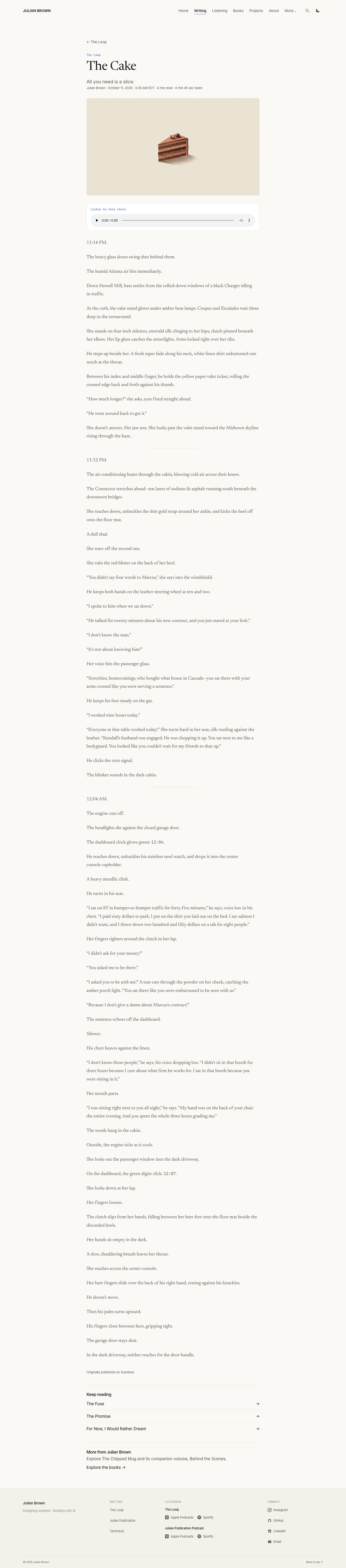
You can read and listen here
The site becomes a place to spend time with the work.
Full reading pages and embedded audio brought the experience onto the site. The Cake shows the change: the story, its artwork, and its audio player together.
One home connects the different parts of the work.
Books, writing, podcasts, projects, and professional background now live within one connected site. The homepage points into those experiences rather than carrying everything itself.